comment by John Butler.
The speakers dry mouth is due to the adrenaline surge when giving a presentation. Ever wondered why there is a glass and jug of water provided for speakers at large events? It is because they often have a dry mouth too. So have a glass of water nearby to sip from occasionally; not too often as to distract the audience but enough to help you.
The other important factor that alleviates dry mouth is preparation and practice beforehand so that you have a greater confidence in your speech.
Finally, remember that most audiences are on your side, they want you to succeed with your talk.
An unexpected benefit of the adrenaline surge for me is the positive buzz at the end on having successfully completed a talk!
Monday, 18 February 2008


Answer to: How do I stop myself from talking for too long (in a presentation)
Asks Gurmail Singh Pabla of HSBC - something that is more easily done than you might expect! What looks good content for time when written is often too long when spoken as speech takes longer than reading.
- As a first step therefore practice your speech out loud and time yourself. You will very quickly see whether your estimate of speech content matches your given time and can adjust it acoordingly.
- I learnt the second step from another professional speaker, Kate Atkin; identify which are the core principles that you wish to convey and which ones you can drop if pushed. Then if your speech looks as if it is going to run over with the full content, you can drop the less important parts on the fly, so to speak, whilst still getting your main message across in time.
- The third step is to employ the assistance of the meeting chair or a good friend in the audience and ask them to give you a sign two minutes before the end of your alloted time, so that you know you have to wrap up and present your conclusions.
Thursday, 7 February 2008
How do I prevent going completely blank and not remembering any of the prepared presentation?
This question by Lesley Bennett of CBA-Design reminds me of an occasion where it happened to me in the middle of a speech! Blank mind! Nothing there! time seemed to stretch and the gazes of the audience left me feeling light a rabbit caught in car headlights at night - frozen with fear and rising panic.
The first thing I did was take a deep slow breath, then I looked down to my bullet point notes which kick started my brain into gear again and got me past the blockage.
The best way to both minimise the likelihood of a blank occurring and overcoming one when it does happen is preparation; researching, planning and practising your speech. Also write the first line of your speech and the last summary line out in full in large print and make a bullet point list of the content of your speech in large print to act as reminders.
And if you still hit a blank that just won't go away? Stay in control of your destiny and decide what happens next; be honest and tell the audience you have hit a blank, they'll be sympathetic in 99% of cases! Then decide whether to stop on this occasion, or have a 5 minute break or - if you have the confidence - ask the audience what they think on the subject of your talk until you get rolling again!
Prepare, practice and stay in control to reduce blanks and their impact.
The first thing I did was take a deep slow breath, then I looked down to my bullet point notes which kick started my brain into gear again and got me past the blockage.
The best way to both minimise the likelihood of a blank occurring and overcoming one when it does happen is preparation; researching, planning and practising your speech. Also write the first line of your speech and the last summary line out in full in large print and make a bullet point list of the content of your speech in large print to act as reminders.
And if you still hit a blank that just won't go away? Stay in control of your destiny and decide what happens next; be honest and tell the audience you have hit a blank, they'll be sympathetic in 99% of cases! Then decide whether to stop on this occasion, or have a 5 minute break or - if you have the confidence - ask the audience what they think on the subject of your talk until you get rolling again!
Prepare, practice and stay in control to reduce blanks and their impact.
Wednesday, 21 November 2007
College students respond to entrepreneurial challenge!
The Odgen Trust Regional Business competition certainly proved the Dale Carnegie maxim “If you want to motivate people, give them a challenge” when teams from four colleges in our region met on the 14th November in a head to head competition, hosted by the Castle Manor Business & Enterprise College in Haverhill.
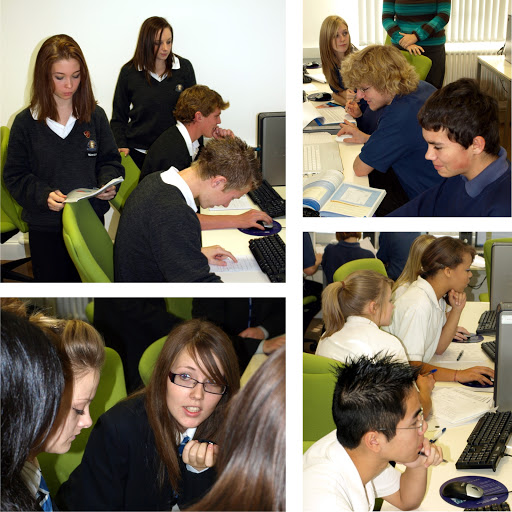
The teams were set the task of developing and presenting a new business venture, an environmentally friendly fashion store set in London’s Covent Garden.
The morning was intense research, development, financial planning (using a provided system that had even the business lecturer baffled for a time and last minute optimisation of the presentations). Right from the start, the teams demonstrated that they could naturally network and cooperate as members of one team helped out those of another when problems arose.
A brief respite over lunch and then the presentations to the invited judges began. Dr Chris Thomas (Dale Carnegie), Keith Benwell (TeamDev) attended on invitation by the Cambridgeshire Chambers of Commerce and Elaine Carr (Flip Flop Marketing) joined them from the Suffolk Chamber. Maria Briggs also attended as a Chamber observer and photographer.
Samuel Ward College Haverhill had entered as the underdogs, with none of the students having a business training background. Their presentation of their company “Fairware” however oozed confidence and speaking with panache. Their forte was the detailed background research on other companies active in the environmentally aware sector and an early recognition that shop sales would be seasonally dependent.
King Edwards VI Bury St Edmunds looked for a continental flavour, sourcing Spanish wool and fabrics. Their shop was going to be open well into the evening to attract their target customers. By this time, spurred on by the quality of the talks, the judges treated the teams as business equals. The team impressed by handling a question, on whether they would use genetically modified cotton, with aplomb.
Castle Manor went Italian with their “Modo Etico” and unashamedly aimed for the fashion conscious market with plans to have celebrities opening the store and also creating a VIP option. They had begun to consider store layout and were aiming for a cool 400% profit margin within the first few months!
The winners by a whisker were Linton College who impressed with an all round performance that extended from their presentation graphics, through to branding with their Luckee Logo, thinking about window designs and shop floor layouts. Specialising in hemp fabric they were only slightly fazed by a wicked question from the judges as to whether they were worried their hemp might be associated with cultivation for more recreational purposes.
The event was a success and really showed, that given the opportunity, we have a wealth of new entrepreneurs for the future of this region. It is hoped that the Ogden Trust will expand this event to other colleges in coming years and that the Cambridgeshire Chambers can continue to support such a worthwhile venture.
Dr Chris Thomas,
Dale Carnegie
Photos of the four college teams, left to right and top to bottom – Linton Village College, Samuel Ward, Castle Manor & King EdwardVI.
The teams were set the task of developing and presenting a new business venture, an environmentally friendly fashion store set in London’s Covent Garden.
The morning was intense research, development, financial planning (using a provided system that had even the business lecturer baffled for a time and last minute optimisation of the presentations). Right from the start, the teams demonstrated that they could naturally network and cooperate as members of one team helped out those of another when problems arose.
A brief respite over lunch and then the presentations to the invited judges began. Dr Chris Thomas (Dale Carnegie), Keith Benwell (TeamDev) attended on invitation by the Cambridgeshire Chambers of Commerce and Elaine Carr (Flip Flop Marketing) joined them from the Suffolk Chamber. Maria Briggs also attended as a Chamber observer and photographer.
Samuel Ward College Haverhill had entered as the underdogs, with none of the students having a business training background. Their presentation of their company “Fairware” however oozed confidence and speaking with panache. Their forte was the detailed background research on other companies active in the environmentally aware sector and an early recognition that shop sales would be seasonally dependent.
King Edwards VI Bury St Edmunds looked for a continental flavour, sourcing Spanish wool and fabrics. Their shop was going to be open well into the evening to attract their target customers. By this time, spurred on by the quality of the talks, the judges treated the teams as business equals. The team impressed by handling a question, on whether they would use genetically modified cotton, with aplomb.
Castle Manor went Italian with their “Modo Etico” and unashamedly aimed for the fashion conscious market with plans to have celebrities opening the store and also creating a VIP option. They had begun to consider store layout and were aiming for a cool 400% profit margin within the first few months!
The winners by a whisker were Linton College who impressed with an all round performance that extended from their presentation graphics, through to branding with their Luckee Logo, thinking about window designs and shop floor layouts. Specialising in hemp fabric they were only slightly fazed by a wicked question from the judges as to whether they were worried their hemp might be associated with cultivation for more recreational purposes.
The event was a success and really showed, that given the opportunity, we have a wealth of new entrepreneurs for the future of this region. It is hoped that the Ogden Trust will expand this event to other colleges in coming years and that the Cambridgeshire Chambers can continue to support such a worthwhile venture.
Dr Chris Thomas,
Dale Carnegie
Thursday, 20 September 2007
Why it’s important to get to know your distributor!
 Understanding the motivation of partners can have a positive effect on your business. Below is a report of an interesting meeting that I chaired within the Cambridgeshire Chambers of Commerce yesterday.
Mike Feinson of (Mulberry House Consultancy) introduced a simple, obvious yet very underused strategy in his talk on Motivating Agents and distributors to an audience at the International Sectors workshop on Managing Agents and Distributors on Wednesday, 19th September.
Getting to know your distributor involved trying to understand what they wanted and needed – which included not only a good product but also principals who knew how to provide the most effective assistance for mutual profit. Endless negotiations with unprofessional manner, a lack of consideration and indeterminate responsibilities were most likely to consign the products of a principal to the C category in the ABC of client groups for distributors – and being a C class principal means that your products are unlikely to ever emerge from the distributor’s briefcase! Distributors are NOT your customers, they are sales people that need to be convinced about your product and that you are serious enough to provide suitable continued support.
Stuart Gibbons (LeMark) recounted his first foray into the international market with BlackTak, a masking foil used in the theatre and filming industry, which through having established a good distributor relationship in the US has actually become synonymous with efficient light leakage blocking (as in “I went round the set and BlackTakked all the light leaks!”). Since then LeMark has expanded internationally country by country, bringing new distributors on board with regular visits and newsletters that keep them on board, engendering the feeling that they share in the success of the venture.
Chris Kubicki (International Sector Chairman, UKTI) rounded off the talks with a timely reminder of not only the OMIS market research facility and financial support to new market entrants but also some initial feedback on the successful link between the Cambridgeshire Chambers of Commerce and the US East Coast.
As ever in these workshops, the audience also played a vital role for a significant proportion of the meeting, with Chris Thomas (Dale Carnegie) facilitating small group discussions on items arising from the talks. The topics raised questions that were answered by both speakers and other participants with relevant experience in a lively exchange of practical knowledge.
The Workshop format has been highly successful; increasing numbers of participants with interests in international business from the novice to the expert have been attending.
We therefore look forward to the next workshop, to be held at Taylor Vinters (
Photo: Mike Feinson (Mulberry House Consultancy), Stuart Gibbons (LeMark) & Chris Kubicki (UKTI)
Tuesday, 18 September 2007
Testimonial
Communication
We recently enjoyed a one hour promotional seminar about communication. Prior to the seminar we were given the opportunity to brief the presenter so that they could tailor the presentation specifically for our business and staff. The seminar was entertaining, informative and provided a supportive environment that enabled everybody to participate in the interactive exercises. After the session staff said how much they had enjoyed the seminar and expressed an interest in similar sessions. The seminar raised people’s awareness about the importance of effective communication. The section relating to memory skills was clearly effective; one week later we are still enjoying lively discussions to establish who can remember the most! This bite-sized session will help us to work better together and bring the best out of ourselves and our teams contribute to improved communications skills. We would highly recommend this to our business colleagues and others.
Sue Clements on behalf of Saunders Boston Ltd
We recently enjoyed a one hour promotional seminar about communication. Prior to the seminar we were given the opportunity to brief the presenter so that they could tailor the presentation specifically for our business and staff. The seminar was entertaining, informative and provided a supportive environment that enabled everybody to participate in the interactive exercises. After the session staff said how much they had enjoyed the seminar and expressed an interest in similar sessions. The seminar raised people’s awareness about the importance of effective communication. The section relating to memory skills was clearly effective; one week later we are still enjoying lively discussions to establish who can remember the most! This bite-sized session will help us to work better together and bring the best out of ourselves and our teams contribute to improved communications skills. We would highly recommend this to our business colleagues and others.
Sue Clements on behalf of Saunders Boston Ltd
Congestion Charging Meeting Stimulates Debate
Report on a Cambridge Chamber event on 17th September 07 at the University Arms Hotel, Cambridge UK
As our meeting Chairman Walter Herriot succinctly put it “
Speaking for the introduction of a Congestion Charge during the peak morning rush hours, Brian Smith, Deputy CEO of Cambridgeshire County Council painted the familiar picture of increasing traffic and congestion. If no changes were implemented we could expect more pain in an 84% increase in junction delays and 46% increase in traffic times.
Speaking against were Richard Normington, Deputy Chairman of Cambridge City Conservatives, Ian Nimmo-Smith, Leader of Cambridge City Council and
In the fortunate position of being able to avoid coming into Cambridge during the morning rush hour, happy to have appointments mid-morning or afternoon and arriving at the event like a sizeable fraction of the audience by public transport or bike, my leaning towards the proposed charging before the meeting were actually neutral or even for it. However, to my surprise, I found my opinion changing during the evening.
Trying to analyse the shift, I found that this was not so much a rational as a visceral response. The nub of the matter was the apparently underlying message from the County Council, that “TIF money for infrastructure improvements is conditional on congestion charging”. It was a TINA (as Richard Normington put it), a “There Is No Alternative” option, an ultimatum. That tends to engender resistance rather willingness to engage.
Brian Smith is right when he says “doing nothing is not an option”.
Cambridgeshire County Council promised that consultation would take place over the coming months. I personally hope that the current position is an initial one - to provoke discussion and flush out objections; to allow room for negotiation, cooperation and discussion; to find a solution in a more positive partnership with all affected parties.
Chris can be contacted on 01223 440024.
Dale Carnegie is currently offering free in-house bite-sized seminars to companies in Cambridgeshire - contact Chris for more details
Subscribe to:
Posts (Atom)